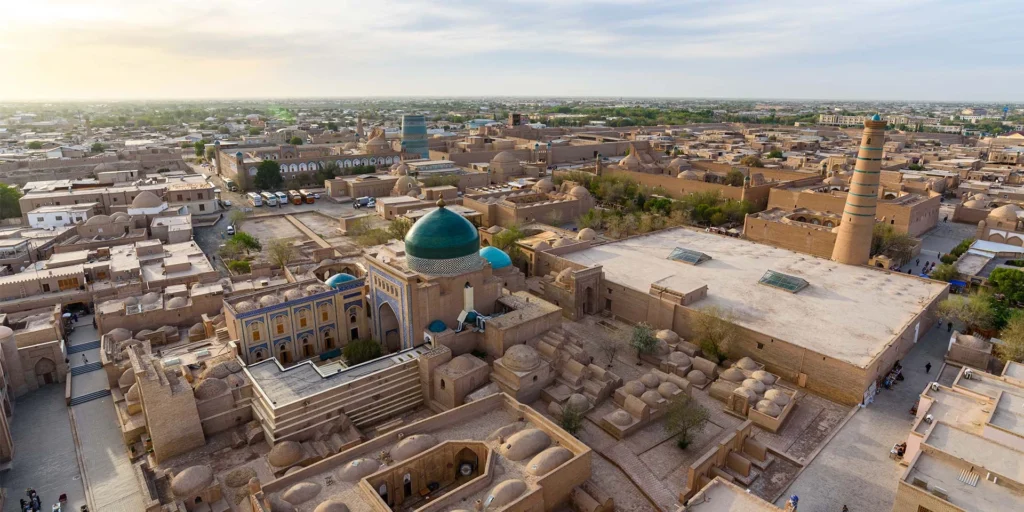
If you’ve spent any time researching the Silk Road, you’ve seen the photos of Samarkand’s blue domes and Bukhara’s towering minarets. But Khiva is different. It doesn’t just have monuments; it is a monument.
In 2026, Khiva remains the most perfectly preserved “museum under the open sky” in Central Asia. While Samarkand feels like a modern city with ancient islands, Khiva—specifically the inner city known as Itchan Kala—feels like you’ve accidentally walked onto a 14th-century film set that never got dismantled. There are no cars inside the main walls, very few power lines to distract the eye, and an atmosphere that shifts from dusty desert outpost during the day to a sapphire-and-gold fairytale at night.
By 2026, the arrival of the high-speed rail has finally connected this remote oasis to the rest of the country, making it more accessible than ever before. Here is everything you need to know about the city that history forgot to change.
Getting There: The 2026 Update
For a long time, Khiva was the “difficult” part of the Uzbek itinerary. You either had to endure a grueling 7-hour drive through the Kyzylkum Desert or fly into Urgench and take a taxi.
The New Rail Connection The big news for 2026 is the expansion of the Afrosiyob (High-Speed Train). You can now zip from Bukhara to Khiva in a fraction of the time it used to take. If you prefer the slow-travel vibe, the overnight sleeper train from Tashkent is still a classic experience—there is something incredibly romantic about waking up to the sight of the desert dunes as you pull into the Khiva station.
Flights and Logistics If you’re short on time, flying is still the most efficient way. You’ll land at Urgench (UGC), which is about 30 minutes away from Khiva.
- Booking: I always check Kiwi.com for flights because they often find “hidden” connections between regional carriers that bigger sites miss.
- 2026 Promo: If you are traveling this February, use the code KIWI20TPWINTER on bookings over €270 for a €20 discount. It’s a nice way to pay for your airport transfers.
- Connectivity: Don’t mess around with local SIM card stalls at the airport. Use Airalo to get an eSIM before you land. You’ll need the data to use Yandex Go (the local Uber) for your ride from Urgench to Khiva.
The Heart of the City: Itchan Kala
The “Inner Fortress” is where you will spend 90% of your time. It’s surrounded by massive, undulating mud-brick walls that reach up to 10 meters high.
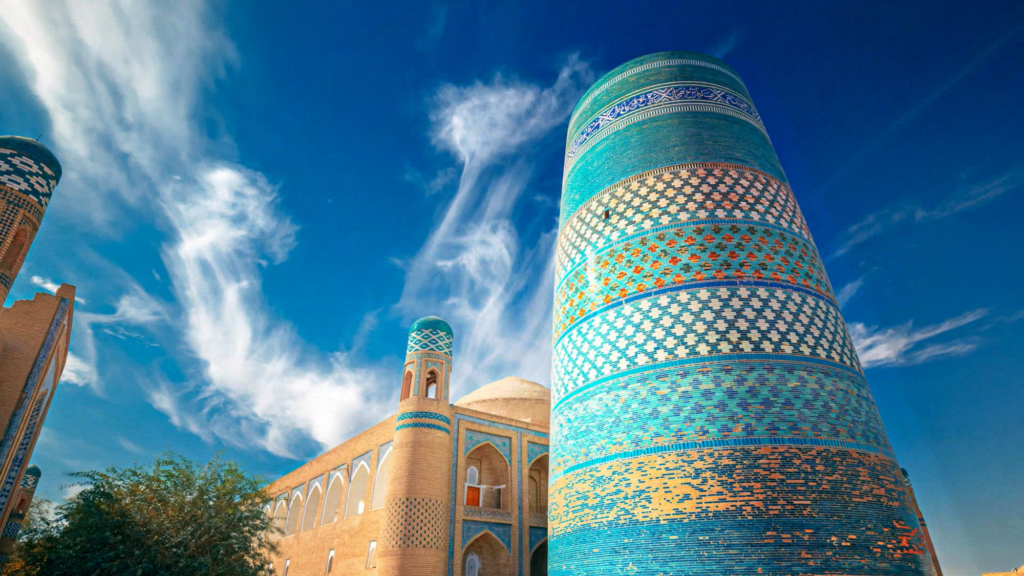
1. The Kalta Minor Minaret
You can’t miss it. It’s the short, fat, turquoise-tiled tower near the West Gate. It was intended to be the tallest minaret in the Islamic world—so tall that the Khan could see all the way to Bukhara. But the Khan died, the money ran out, and construction stopped. The result is a beautifully “unfinished” stump that has become the iconic symbol of the city.
2. Juma Mosque (The Friday Mosque)
This is unlike any mosque you’ve seen in Samarkand. There are no grand domes or massive portals. Instead, the roof is supported by 213 carved wooden pillars. Some of them date back to the 10th century. The play of light and shadow through the skylights onto the dark wood is one of the most peaceful sights in Uzbekistan.
3. Kuhna Ark
This was the “city within a city”—the residence of the Khiva Khans. It contains the mint, the throne room, the harem, and the stables.
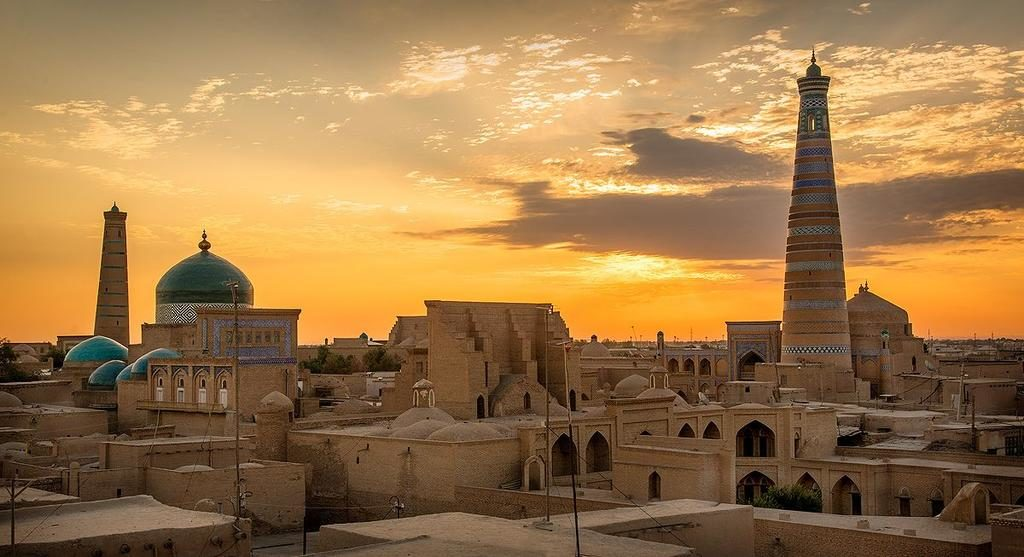
- The Watchtower: For a separate fee (around 40,000 SOM), you can climb the watchtower. Do this at sunset. The view of the sun dipping below the desert horizon, turning the mud-brick walls into glowing orange gold, is the best view in the city.
4. Islam Khodja Minaret
If you have strong legs and aren’t claustrophobic, climb this one. It’s the tallest minaret in Khiva. The stairs are narrow, steep, and dark, but the 360-degree view from the top makes the Itchan Kala look like a perfect miniature model.
Food: The Flavors of Khorezm
Khiva has its own distinct cuisine that is different from the rest of Uzbekistan. It’s heavier on dill and eggs, and lighter on the heavy fats found in Samarkand.
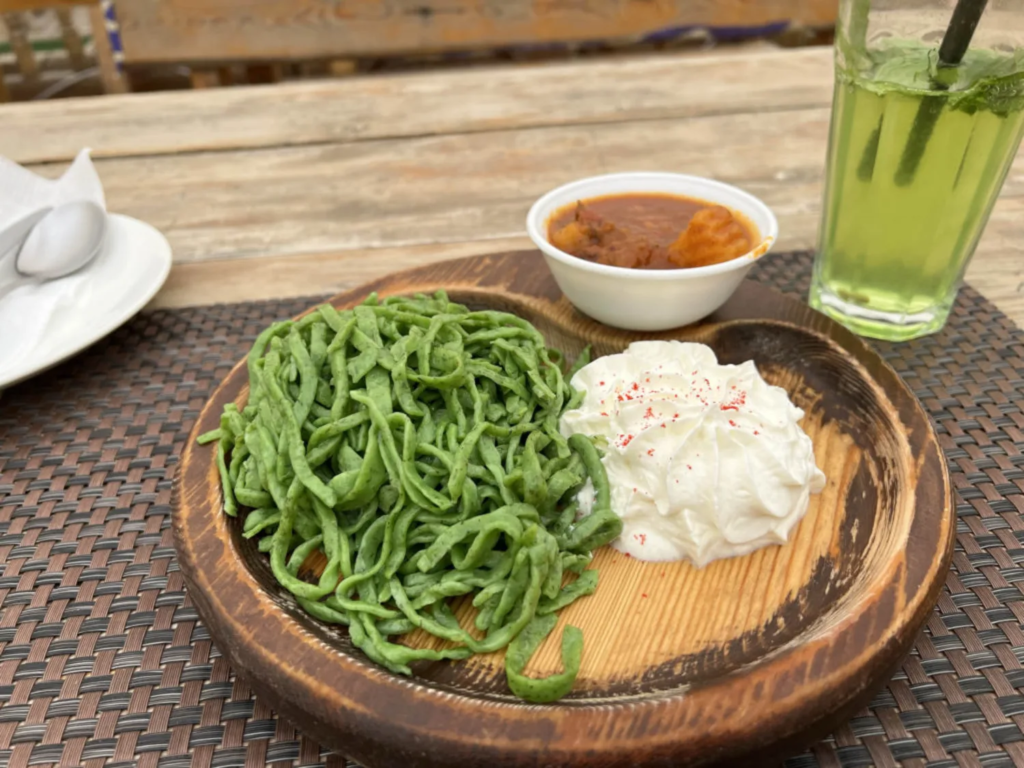
- Shivit Oshi: This is the “must-eat” dish. It consists of bright green noodles (infused with dill) topped with a beef and vegetable stew and served with a side of yogurt. It’s surprisingly fresh and very photogenic.
- Tukhum Barak: Effectively “egg dumplings.” These are square ravioli-style pockets filled with a raw egg mixture that is cooked instantly when dropped into boiling water. It’s a labor-intensive dish, so if you see it on a menu, order it.
- The Bread: Khiva’s bread (non) is flatter and wider than the thick, cake-like bread of Samarkand. You’ll see it being baked in clay tandyr ovens all over the city.
Where to eat: Terrassa Cafe is the most popular spot for a reason—the view. However, for a more authentic and quiet lunch, look for Khiva Moon. It’s set in a courtyard with traditional seating (tapchans) and the food feels like a home-cooked meal.
Arts, Crafts, and Shopping
Khiva is a city of artisans. Unlike the mass-produced souvenirs in some parts of the world, much of what you see here is still made by hand in small workshops.
- Woodcarving: Khiva is famous for its intricate woodcarving. You’ll see masters working on massive pillars and doors. If you want something smaller to take home, look for carved bookstands or jewelry boxes.
- Silk Carpets: There is a UNESCO-supported silk carpet workshop inside an old madrasah near the Kalta Minor. You can watch women weaving incredibly detailed carpets using natural dyes (like pomegranate skin for gold and madder root for red).
- Camel Hair Socks: It sounds random, but the desert gets freezing at night. The hand-knitted camel hair socks sold by the grandmothers near the North Gate are the warmest things you will ever own.
Beyond the Walls: The Desert Fortresses
If you have an extra day, hire a driver to take you into the desert to see the Elliq-Qala (The Fifty Fortresses). These are 2,000-year-old ruins of the ancient Khorezmian Empire.
- Ayaz Kala and Toprak Kala are the most impressive. They sit on high ridges overlooking the desert.
- Getting there: You can arrange a driver through your hotel, but for more freedom, check GetRentacar.com. You can rent a car from a local for the day, which is often cheaper and allows you to stay at the ruins for sunset without a driver rushing you back.
Practical Travel Tips
Money and Finance Uzbekistan is rapidly moving toward cards, but Khiva is still very much a cash city. The local currency is the Uzbek SOM.
- Payment Tips: Use a card with zero or low forex fees for your hotel and bigger restaurants. The IndusInd Tiger Credit Card or various SBI Credit Cards are great because they also offer international lounge access—which you’ll appreciate during a long layover in Tashkent.
Safety and Insurance Uzbekistan is incredibly safe, but the desert climate and the “adventurous” nature of the food mean you should have your basics covered.
- Travel Protection: For standard medical and travel coverage, ICICI Lombard provides reliable plans for Indian travelers. If you’re already an Acko user for your car or bike, check their app for quick travel insurance add-ons.
- International Options: For a simple, digital-first policy, AURAS is a favorite among travelers for its clear terms.
Dealing with Delays Central Asian flight and train schedules can be “flexible” during sandstorms or winter weather. If your flight is delayed or your bags get lost between connections, AirAdvisor is a lifesaver. They handle the baggage claims and compensation paperwork so you don’t have to spend your holiday on the phone with airline customer service.
A Simple 3-Day Khiva Itinerary
Day 1: The Grand Tour
- Morning: Enter through the West Gate. Get your 2-day ticket (valid for almost all museums). Visit the Kalta Minor and the Muhammad Amin Khan Madrasah.
- Afternoon: Explore the Kuhna Ark and the Juma Mosque.
- Evening: Climb the watchtower at Kuhna Ark for sunset. Dinner at Terrassa Cafe.
Day 2: Palaces and Patios
- Morning: Head to the Tosh-hovli Palace (The Stone Palace). The tile work here is the most intricate in the city.
- Afternoon: Visit the Pahlavan Mahmud Mausoleum (the patron saint of Khiva). It’s a place of pilgrimage and very quiet. Then, climb the Islam Khodja Minaret.
- Evening: Walk the Outer Walls (Dishan Kala) to see the part of the city where locals actually live.
Day 3: The Desert or the Crafts
- Option A: Take a day trip to the Elliq-Qala desert fortresses.
- Option B: Stay in the city and take a woodcarving or bread-making workshop. Visit the silk carpet workshop and spend your final evening wandering the lantern-lit streets after the day-trippers have left.
Capturing the Magic
Khiva is a dream for content creators. If you want to make sure your photos and videos actually capture how beautiful it is, check out Skillshare for a quick “Travel Storytelling” course. Once you’re back at your hotel, you can use Wondershare to quickly edit your desert footage into something professional.
If you’re coming from Europe or the UK and want a seamless experience, Lastminute UK often has boutique hotel packages in Khiva that include transfers, which can save you a lot of logistical headaches.
Final Thought
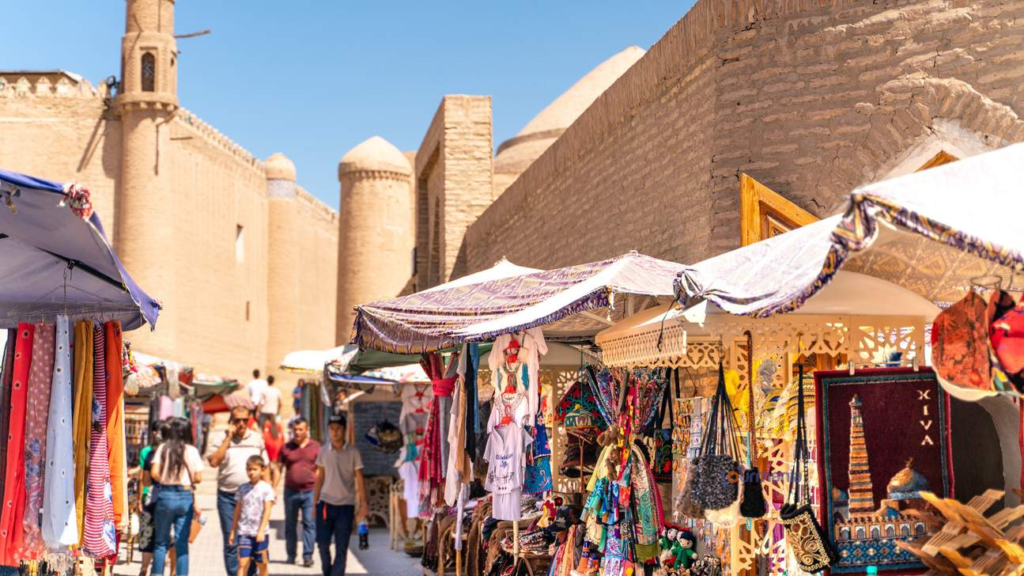
Khiva isn’t a city you “visit” as much as it is a city you “inhabit” for a few days. Don’t rush. The magic isn’t just in the big minarets; it’s in the quiet morning light hitting the mud walls, the taste of fresh bread from a street oven, and the feeling that you’ve found a secret part of the world that hasn’t changed in five hundred years.