Shimla: The Eternal “Queen of Hills” and Her Colonial Legacy
If the Indian Himalayas had a capital that combined history, grand architecture, and a perennial festive spirit, it would undoubtedly be Shimla. Situated at an altitude of 2,276 meters, Shimla was once the summer capital of British India, serving as the retreat for the Viceroy and his administration from the blistering heat of the plains. Today, it remains one of India’s most iconic hill stations, offering a sophisticated blend of Victorian charm and vibrant Himachali culture.
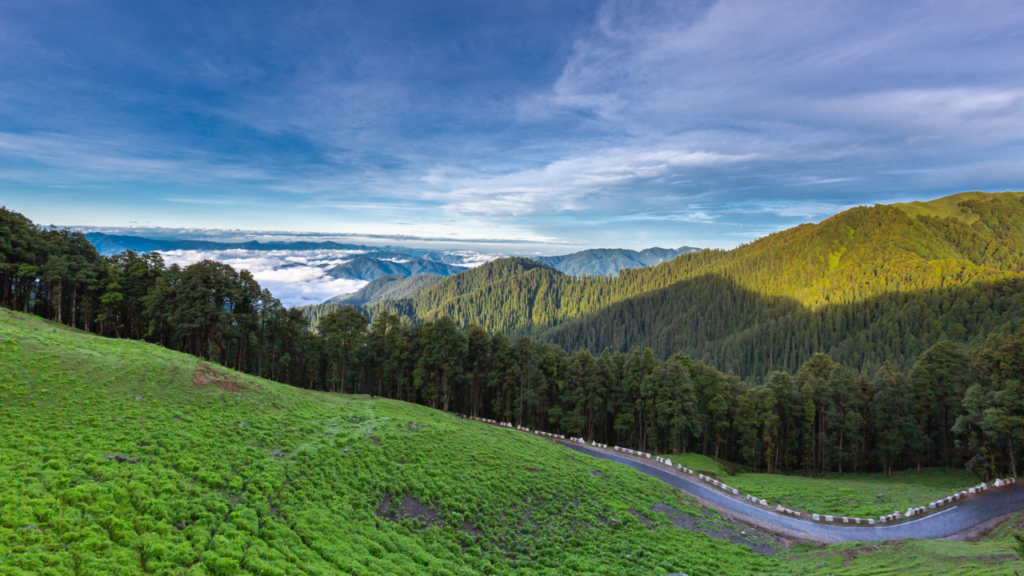
Spanning across seven hills—including Prospect Hill, Summer Hill, and Observatory Hill—Shimla is a town of ridge-top walks, bustling bazaars, and forests of pine and oak that have inspired writers from Rudyard Kipling to Anita Desai.
The Architectural Soul: Viceregal Lodge
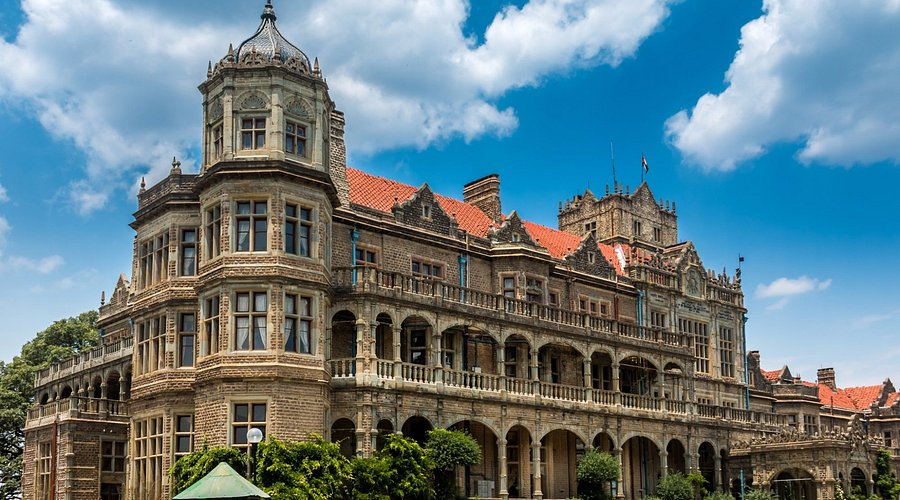
The most significant monument to Shimla’s colonial past is the Viceregal Lodge (now the Indian Institute of Advanced Study) on Observatory Hill. Completed in 1888, this Jacobethan-style building was designed by Henry Irwin and served as the residence of the British Viceroy.
Walking through its expansive teak-paneled interiors and manicured botanical gardens, you feel the weight of history. It was within these walls that some of the most critical discussions regarding the partition of India and Pakistan took place. The building’s grey stone exterior, reminiscent of a Scottish castle, stands as a stark, majestic contrast to the deep green of the surrounding Himalayan cedars.
The Pulse of the Town: The Ridge and Mall Road
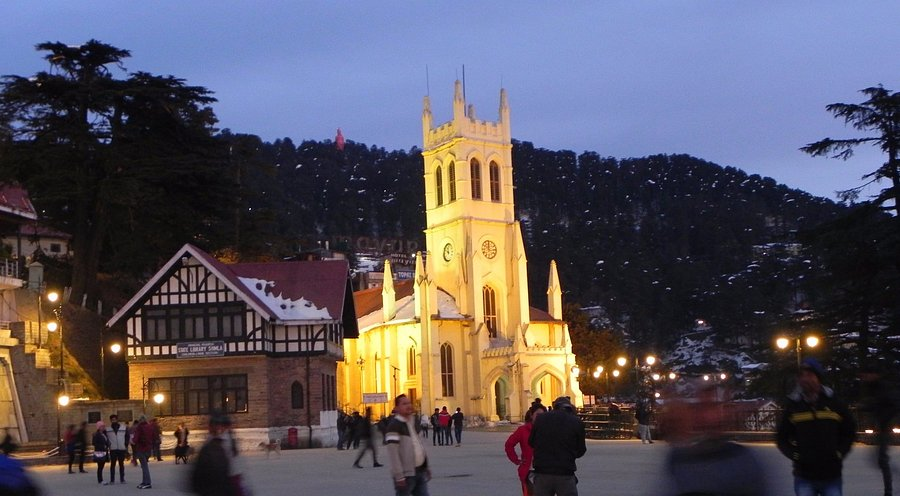
The social heart of Shimla is The Ridge, a wide-open space in the center of town that offers panoramic views of the snow-capped peaks of the Inner Himalayas. Dominating the skyline here is the neo-gothic Christ Church, the second oldest church in Northern India, famous for its five fine stained-glass windows representing the Christian virtues of Faith, Hope, Charity, Fortitude, Patience, and Humility.
Connecting to The Ridge is the Mall Road, a pedestrian-only thoroughfare where Shimla’s modern life unfolds. Lined with shops, restaurants, and heritage buildings like the Gaiety Theatre, the Mall Road is the place for a leisurely evening stroll. The theater, opened in 1887, is an architectural gem that still hosts cultural performances, maintaining its status as a Victorian cultural hub.
Jakhoo Hill: The Highest Vantage Point
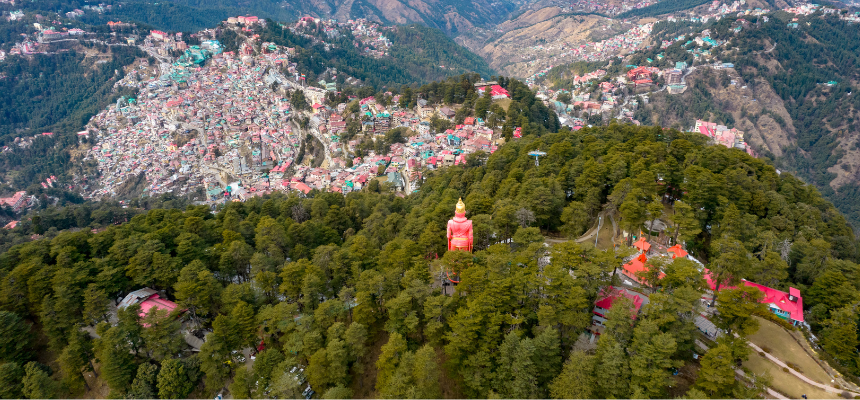
For those looking to see Shimla from its highest point, a trek (or a ropeway ride) to Jakhoo Hill is essential. Standing at 2,455 meters, the hill is crowned by the ancient Jakhoo Temple dedicated to Lord Hanuman.
A massive 108-foot-tall orange statue of the deity towers over the trees, visible from almost every part of the town. The walk up the hill is through dense forests where the air is noticeably cooler and crisper. Be prepared to share your journey with the local monkeys, who are famously bold and considered the “guardians” of the temple.
The Kalka-Shimla Toy Train: A Journey Through Time
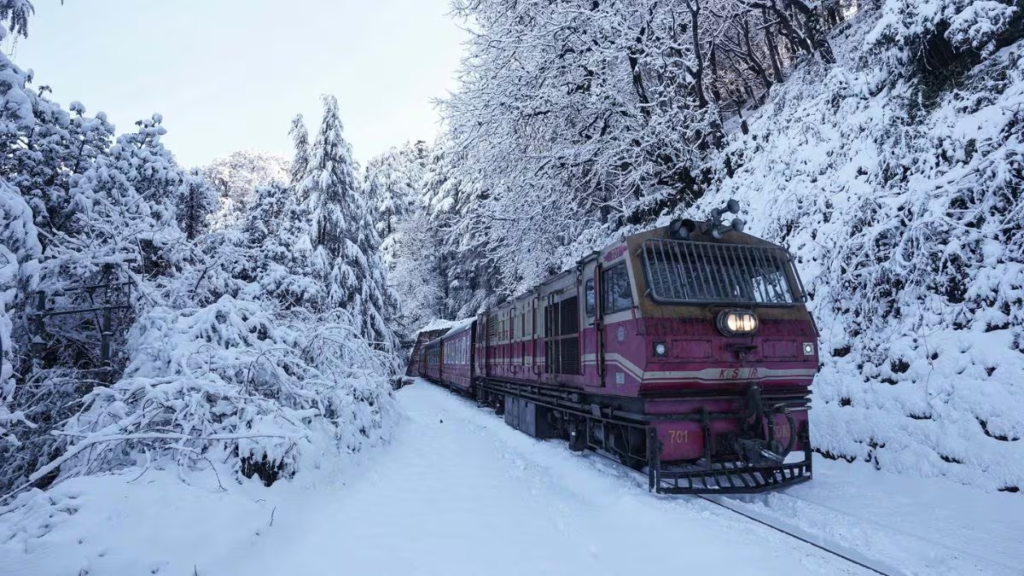
No visit to Shimla is complete without experiencing the Kalka-Shimla Railway, a UNESCO World Heritage site. Completed in 1903, this narrow-gauge railway covers 96 kilometers, passing through 102 tunnels and over 800 bridges.
The “Toy Train” winds slowly through the Shivalik hills, offering views that no road trip can match. As the train chugs along at a leisurely 25 kilometers per hour, you see terraced fields, quiet hamlets, and forests that seem to stretch into infinity. It is a masterclass in colonial-era engineering and a testament to the romance of mountain travel.
Summer Hill and Annandale: Quiet Retreats
If you seek an escape from the crowds of the Mall Road, Shimla offers several quieter corners:
- Summer Hill: Located 5 km from the main ridge, this is a serene area where Mahatma Gandhi often stayed during his visits to Shimla. It is a quiet residential area perfect for nature walks.
- Annandale: Once the playground of the British, this large glade now serves as a scenic golf course and helipad. It also houses the Army Heritage Museum, which offers a fascinating look at the history of the Indian Army and the battles fought in the high mountains.
Gastronomy: From Victorian Tea to Pahari Flavors
Shimla’s culinary scene is as diverse as its history:
- Savoring the Past: Visit historic cafes like Cecil or Wake & Bake on the Mall Road for a mix of English breakfasts and wood-fired pizzas.
- Local Delights: Look for vendors selling Khoru (a yogurt-based soup) and Siddu in the lower bazaars.
- The Bakeries: Shimla’s old-school bakeries, such as Krishna Bakers, are famous for their fruitcakes and cream rolls, a legacy of the European influence on the town.
Essential Travel Information
- Best Time to Visit:
- March to June: For pleasant weather and clear skies.
- September to November: To see the valley in its post-monsoon green glory.
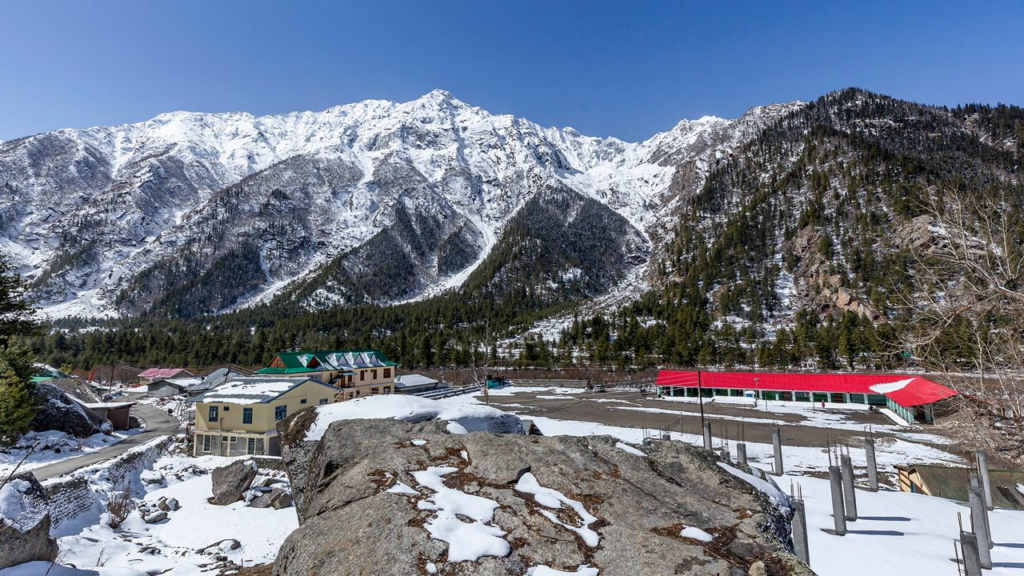
- December to February: For the “Winter Wonderland” experience. Shimla’s snowfall is a major draw for tourists across India.
- How to Reach:
- By Air: The Jubbarhatti Airport is 22 km from the city, though flights are weather-dependent.
- By Rail: The Toy Train from Kalka is the most scenic way. Kalka is well-connected to Delhi and Chandigarh.
- By Road: Shimla is well-connected via NH5. It is approximately 350 km from Delhi and 115 km from Chandigarh.
- Traveler’s Tip: Shimla is a “walking town.” Most of the central areas are vehicle-free zones. Wear comfortable walking shoes, as you will be navigating plenty of slopes and stairs.
Conclusion
Shimla is a town that balances its imperial past with a vibrant, modern Indian identity. It is a place of grand vistas and intimate forest trails, of bustling markets and silent, historic corridors. Whether you are riding the Toy Train through the mist, standing in the shadow of the Viceregal Lodge, or simply enjoying the sunset from the Ridge, Shimla offers a sense of timeless elegance. It remains the “Queen of Hills” not just for its height, but for the depth of the stories it tells.