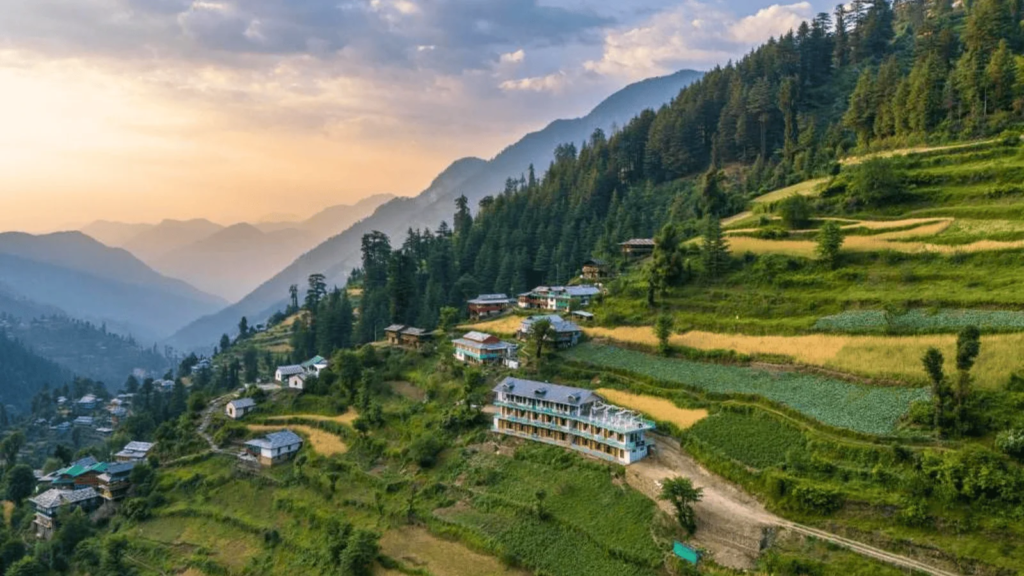

When people mention Dharamshala, they usually refer to two worlds. Located in the Kangra Valley of Himachal Pradesh, this destination has two distinct parts: the lower Dharamshala, a busy commercial center, and the upper Dharamshala, known as McLeod Ganj. Set against the majestic, snow-covered Dhauladhar mountains, this region is more than just a hill station; it is a center for spirituality, a hub for Tibetan culture, and a starting point for some of the most beautiful treks in the Himalayas.
The Historical Tapestry of the Kangra Valley

Before it became the famous home of the Tibetan government-in-exile, Dharamshala was a quiet hill station for the British. The name itself means “a spiritual dwelling” or “rest house,” reflecting its long-standing connections to weary travelers and seekers.
However, the area’s identity changed forever in 1959 when His Holiness the 14th Dalai Lama sought refuge here. Since then, it has turned into a lively “Little Lhasa.” The bled of Himachali heritage and Tibetan traditions has created a cultural experience unlike any other in India. From the fluttering prayer flags to the rhythmic chanting of monks, McLeod Ganj radiates stories of resilience, peace, and devotion.
The Tsuglagkhang Complex: The Heart of McLeod Ganj

The spiritual center of the town is the Tsuglagkhang Complex. This is the official home of the Dalai Lama and the largest Tibetan temple outside Tibet. Unlike many grand cathedrals or temples that rely on luxury, Tsuglagkhang is notably simple and welcoming.
As you walk through the complex, you will see the Kalachakra Temple, famous for its stunning murals and intricate mandalas. The main temple houses a magnificent gilded statue of Lord Buddha, along with statues of Chenrezig and Guru Rinpoche. One captivating experience for visitors is the afternoon debates. In the courtyard, monks gather to debate Buddhist philosophy, using expressive hand gestures and claps to emphasize their points. It is a lively tradition that gives a glimpse into the rigorous training of monastic life.
The Architectural Beauty of St. John in the Wilderness

Nestled in a dense forest of deodar trees between Forsyth Ganj and McLeod Ganj lies the St. John in the Wilderness church. Built in 1852, this Neo-Gothic structure is one of the most notable remnants of the British era. The church is known for its exquisite Belgian stained-glass windows, donated by Lady Elgin, the wife of Lord Elgin, a former Viceroy of India who is buried in the church’s graveyard.
The setting is beautiful. The dark grey stone of the church contrasts sharply with the deep green of the ancient cedars, and the silence of the surrounding woods provides a peaceful contrast to the busy markets just a few kilometers away. It is a place where history and nature come together perfectly.
Adventure Awaits: The Triund Trek

For many, the highlight of a trip to Dharamshala is the trek to Triund. Known as the “jewel of Dharamshala,” Triund is a large alpine meadow at the foot of the Dhauladhar range. The trek is about 9 kilometers from McLeod Ganj and is considered moderately easy, making it accessible for beginners.
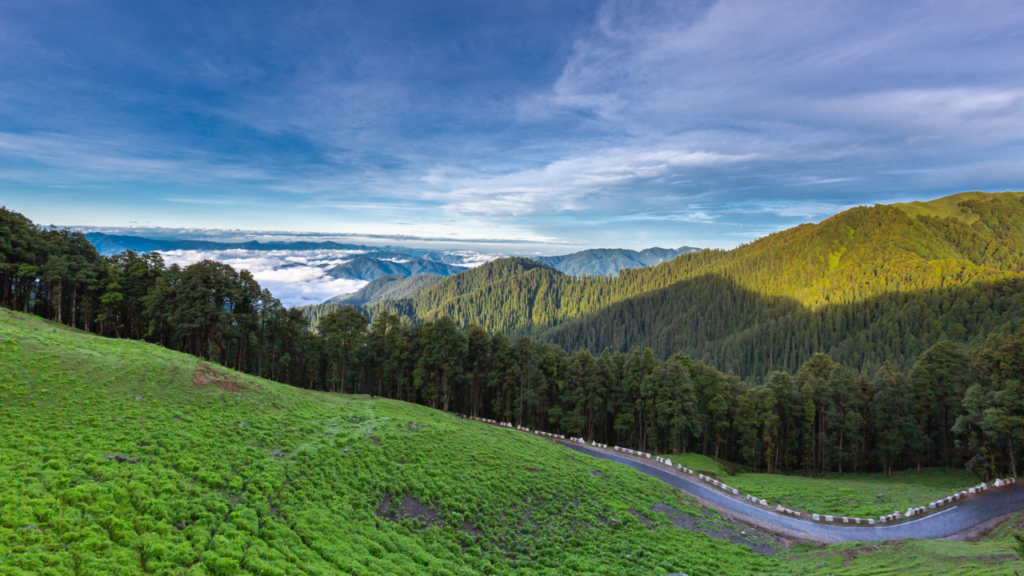
The trail winds through forests of oak, deodar, and rhododendron. As you climb, the views of the Kangra Valley become more spectacular. However, nothing prepares you for the moment you reach the ridge. On one side, the valley stretches out in a misty expanse; on the other, the granite peaks of the Dhauladhars rise so steeply that it feels as if you could reach out and touch them. For those wanting to extend the adventure, spending a night in a tent under the stars at Triund is a must-do.
The Artistic Legacy of Norbulingka Institute

A short drive from the main town takes you to the Norbulingka Institute, dedicated to preserving Tibetan literary and artistic traditions. The institute showcases beautiful Tibetan architecture, with cascading water bodies, koi ponds, and traditional Japanese-style gardens.
Here, visitors can watch master craftsmen and their students at work. From thangka painting (intricate religious scrolls) to wood carving and metal statue making, the institute ensures that these ancient skills are not lost. The onsite “Losel Doll Museum” is particularly interesting, featuring over 150 dolls dressed in traditional costumes from various regions of Tibet, depicting daily life and festival rituals.
Bhagsu Falls and the Hippie Trail of Dharamkot

Just a short walk from McLeod Ganj is the village of Bhagsunag, known for its ancient Shiva temple and the flowing Bhagsu Falls. While the falls attract many tourists, the real charm lies further up the hill in the village of Dharamkot.
Dharamkot is often called the “Hippie Village.” It has a distinct bohemian vibe, drawing travelers who come for long stays, yoga retreats, and meditation courses. The cafes here, like the popular Shiva Cafe offer a relaxed atmosphere where you can enjoy Israeli cuisine, vegan options, and some of the best coffee in the mountains while gazing out over the valley.
The HPCA Stadium: Cricket in the Clouds

Down in the lower Dharamshala is a site that even non-sports fans will appreciate: the Himachal Pradesh Cricket Association (HPCA) Stadium. Frequently regarded as the most beautiful cricket stadium in the world, it sits at an altitude of 1,457 meters. The view of the bright red and blue stands against the backdrop of snow-capped mountains is truly surreal. It shows how modern design can enhance the natural beauty of the landscape.
A Gastronomic Journey: From Momos to Thukpa
The food in Dharamshala is an integral part of the travel experience. The streets of McLeod Ganj are lined with vendors selling steaming plates of momos (dumplings) and bowls of thukpa (noodle soup).
- Tibetan Kitchen: For an authentic meal, try the Shapta (stir-fried meat) and Tingmo (steamed bread).
- Illiterati Cafe: This is a haven for book lovers. With balconies overlooking the valley and walls lined with books, it’s the perfect spot to spend an afternoon with a wood-fired pizza and a Belgian brownie.
- Local Street Food: Don’t miss the Bhagsu Cake, a local dessert made of a biscuit base, caramel, and chocolate that has become a cult favorite among travelers.
Essential Travel Information
- Best Time to Visit: The months of March to June are ideal for pleasant weather and trekking. September to November offer the clearest views of the mountains after the monsoon. If you enjoy the cold, January and February bring heavy snow to the upper reaches.
- How to Reach:
- By Air: Gaggal Airport is just 15 km from Dharamshala.
- By Rail: The nearest broad-gauge station is Pathankot (85 km away).
- By Road: Overnight luxury buses run daily from Delhi and Chandigarh.
- A Note on Sustainability: As Dharamshala’s popularity increases, so does the pressure on its environment. Travelers are encouraged to use water wisely, avoid single-use plastics, and support local businesses that promote eco-friendly tourism.
Conclusion
Dharamshala invites you to reflect. It is a place where you can begin your day with a mountain trek, spend your afternoon learning about history, and end your evening in a quiet meditation hall or a lively cafe. The contrast between the rugged Himalayas and the warmth of Tibetan culture makes this hill station a truly inspiring spot on the Indian landscape.